5 Fun Clock Activities for the Classroom
5 min read • Written by the Tick Tock Time team
Teaching children to tell time does not have to involve staring at worksheets. The most effective learning happens when children are actively engaged — moving, creating, and problem-solving. Here are five classroom-tested activities that make clock reading practice genuinely fun.
Activity 1: Paper Plate Clocks
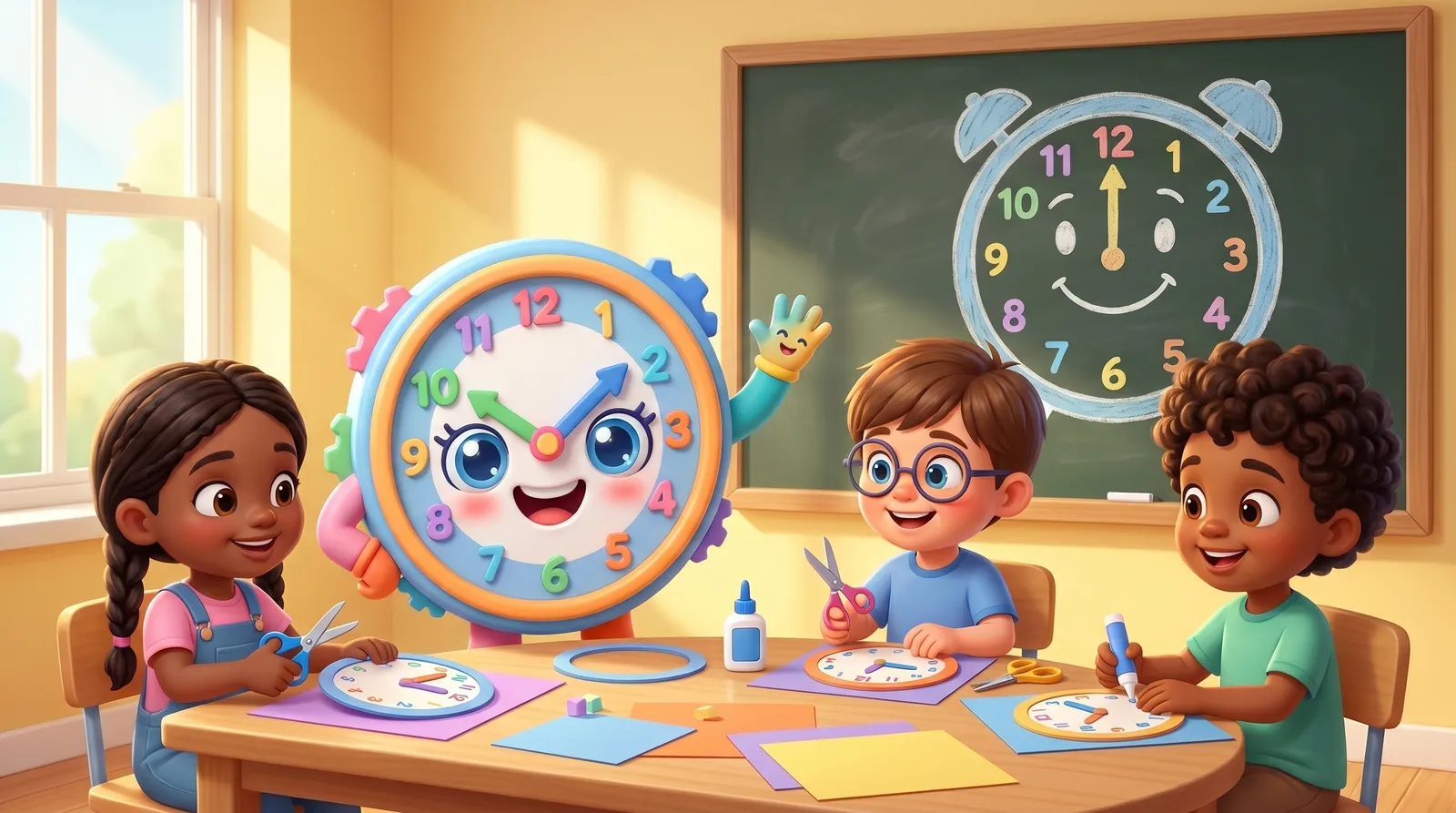
Have each student create their own clock using a paper plate, a brass fastener, and two cardboard arrows (one shorter for hours, one longer for minutes). Students can color-code their hands — for example, blue for the hour hand and red for the minute hand. Once built, call out different times and have students set their clocks to match.
Why it works: Building a clock from scratch helps children understand the relationship between the parts. The physical act of moving the hands reinforces the connection between hand position and time.
Activity 2: Time Bingo
Create bingo cards where each square contains a different analog clock face showing a specific time. The teacher calls out times in digital format ("Who has 3:30?" or "Who has quarter past 7?") and students mark the matching clock on their card. The first to complete a row wins.
Why it works: Bingo is naturally exciting and competitive. Students practice reading analog clocks quickly while listening to time expressed in multiple formats.
Activity 3: Daily Schedule Timeline
Together as a class, create a visual timeline of the school day. For each activity (circle time, reading, recess, lunch, math), draw a small analog clock showing when it happens. Place the timeline on the wall and reference it throughout the day: "Look at our timeline — the clock says 10:30, so it is time for recess!"
Why it works: Connecting clock reading to real events gives time concrete meaning. Students begin to associate specific clock positions with activities they care about.
Activity 4: Interactive Clock Games on the Smartboard
Project an interactive clock game onto the classroom smartboard and have students take turns answering. With tools like Tick Tock Time, you can run through our online clock reading quiz as a whole-class activity, with students voting or raising hands to select their answer. The progressive difficulty (from full hours to 5-minute intervals) naturally differentiates for mixed-ability classrooms.
Why it works: Digital interactive tools provide instant feedback and keep the whole class engaged. The visual animations and sound effects add excitement that paper materials cannot match.
Activity 5: Clock Scavenger Hunt
Place printed analog clock cards around the classroom or hallway, each showing a different time. Give each student or pair a worksheet with digital times listed, and have them find the matching analog clock card for each one. When they find a match, they write down where they found it.
Why it works: Movement and exploration make learning active rather than passive. The matching format reinforces the connection between analog and digital representations.
Making Time Stick
The common thread across all these activities is active engagement. Whether students are building, hunting, playing bingo, or dragging clock hands on a screen, they are doing far more than memorizing — they are developing a genuine understanding of how time works. Mix and rotate these activities throughout the week to keep practice fresh and enjoyable.
Try Tick Tock Time in Your Classroom
Free, no login required, and works on any device — perfect for smartboards, tablets, or individual computers.